Tuesday, April 28, 2020

Standard Features on a Taylor Wing Truck Tool Box | Toolbox for Trucks


The original Taylor Wing Tool Box is simply the best in the industry. Constructed of 1/8” thick, marine grade aluminum, they’re twice as thick as most competitor's boxes plus there’s a stiffening system in the lid. Highest quality. Strongest. The best. Period.

Available at:

Sunday, April 26, 2020

WALTCO - Customer Testimonials - North American Trailer


“Value to us is having an excellent product, number one, great service number two, and the reliability of the product itself that we don't see them come back for any issues. WALTCO does all of that for us.”
- David Ward, President and Greg Giguere, Director of Sales & Operations, North American Trailer

Friday, April 24, 2020

Tongue Weight Safety Demonstration


Proper trailer tongue weight improves the vehicle and trailer towing experience by improving performance. Not enough tongue weight or force on the hitch/tow ball causes an increase in trailer sway from side to side, making it difficult to control. Conversely, too much tongue weight or force on the hitch/tow ball could overload the rear tires of the towing vehicle, pushing the rear end of the vehicle around. This could also negatively affect the vehicle handling. Performance is impaired as you might not be able to go around corners and curves properly, and your vehicle may not stop quickly enough when you press the brake pedal. The Weigh Safe Drop Hitch effectively measures the tongue weight of your towing load, improving the vehicle tow load balance and performance.

Learn more at: https://www.weigh-safe.com/

Wednesday, April 22, 2020

CHEVROLET COMMERCIAL ANNOUNCES BIG NUMBERS AT NTEA WORK TRUCK SHOW

Express offers 24 percent more torque; Silverado Medium Duty offers 23 percent higher gross combined weight rating; GM commerical sales have grown 67 percent since 2013


INDIANAPOLIS — At The Work Truck Show, Chevrolet announced a new engine for the Express and Low Cab Forward trucks, as well as a host of improvements for the Silverado 4500 HD, 5500 HD and 6500 HD chassis cabs. These changes are expected to fuel further growth for General Motors’ commercial fleet business, which has seen a 67 percent increase in sales since 2013.

“Our commercial fleet sales growth is a result of excellent product and an even better team,” said Ed Peper, U.S. vice president, GM Fleet. “The changes for Express, Low Cab Forward and medium-duty trucks are great examples of the team’s commitment to helping customers with their fleet vehicle needs. With the product changes for 2020, we are on track for another year of strong commercial growth.”

Heavy-Duty Power for Express, Low Cab Forward

For 2021, Express configurations and Low Cab Forward will be available late this summer with a new 6.6L V-8 gas engine. Originally introduced in the all-new 2020 Silverado 2500 HD and 3500 HD, the direct-injected engine is SAE rated at 401 horsepower and 464 lb-ft of torque for the Express. That is 17 percent more horsepower and 24 percent more peak torque than the 6.0L it replaces. The 6.6L output on the Low Cab Forward is 350 horsepower and 425 lb-ft of torque, which is nearly 18 percent more horsepower and 14 percent more peak torque than its outgoing 6.0L.

Whether hauling equipment, supplies or people, the additional output and wider torque band will give drivers more on-demand power and confidence, especially with heavy payloads. Approximately 70 percent of current Express owners opted for the 6.0L V-8 option, and Chevrolet expects this new engine to garner the same or increased take rate.

Demand for Express remains high across passenger, cargo and cutaway configurations, with commercial fleet increasing 12 percent year over year in 2019. Low Cab Forward trucks also had an excellent 2019 with a 109 percent increase in commercial sales year over year, gaining an estimated two points of share in the segment.

Medium-Duty Silverados Offer Customers More

Debuting in 2018, the Silverado 4500 HD, 5500 HD and 6500 HD chassis cab trucks fill an important space in the Chevrolet Commercial portfolio. Continuing to listen to its customers, Chevrolet is bringing a host of updates to medium-duty chassis cabs to further increase performance and flexibility for upfitting:

Maximum gross combined weight rating is now up to 37,000 pounds1, offering a 23 percent increase in hauling capability.
A new mechanical locking rear axle improves traction by automatically locking when a rear tire slips – such as driving off-road or on slippery surfaces.
Longer axle-to-end-of-frame options for the two shortest wheelbases enable longer upfit bodies and increased upfit flexibility.
New extended mirror arms, which offer better visibility on wider and longer upfit configurations, are coming soon.
New left-hand power take-off capability offers upfitters easy access to the PTO port from either side of the truck.
Auxiliary switch bank available with six additional upfit switches2 conveniently located in headliner.
Investing in Future Growth

GM’s fleet business is poised for additional growth, as investments in our manufacturing facilities will increase pickup truck supply to meet demand.

Recent investments at our manufacturing facilities include:
  • A $150 million investment at Flint Assembly in Flint, Michigan to increase production capacity of heavy-duty trucks by 40,000 vehicles annually, beginning in 2020.
  • A $175 million investment in a facility which will be built in Brookville, Ohio to produce engine components needed to increase production of the 6.6L Duramax diesel V-8 engines later this year.
  • A $1.5 billion investment, including $1 billion toward the Wentzville, Missouri plant, to prepare for future mid-size pickup and van improvements.
For more information about Chevrolet’s Commercial portfolio, please visit www.chevrolet.com/commercial.

1 37,000 pound Maximum Gross Combined Weight Rating requires 4.88 rear-axle ratio, 15k or 15.5k rear-axle capacity and the Allison 1750 or 2750 transmission.

2 Equipment from independent suppliers is not covered by the GM New Vehicle Limited Warranty. GM is not responsible for the safety or quality of independent supplier alterations.

ABOUT CHEVROLET

Founded in 1911 in Detroit, Chevrolet is one of the world's largest car brands, doing business in more than 100 countries and selling more than 4.0 million cars and trucks a year. Chevrolet provides customers with fuel-efficient vehicles that feature engaging performance, design that makes the heart beat, passive and active safety features and easy-to-use technology, all at a value. More information on Chevrolet models can be found at www.chevrolet.com.


Monday, April 20, 2020

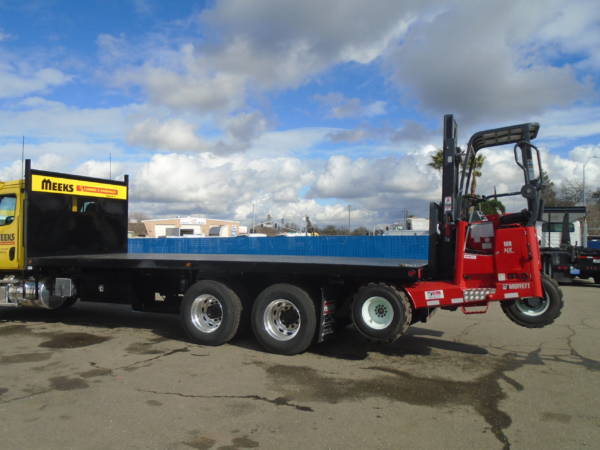
Enoven Work Platform – “Piggy Back Flatbeds"


EWP HD Series

Available 18′ and 24′ with mounts for the following Forklifts


Princeton                                                        Image result for MOFFETT     
                                                        

                                                                           Moffett


Donkey


Learn more at: 
https://enovenind.com/products-2/flatbeds/ewp-hd-series/


W. Sacramento
2904 Duluth Street
W. Sacramento, CA 95691
Monday thru Friday
7:00am – 4:30pm

Bakersfield

5709 Gusher Court
Bakersfield, CA 93308

Redding

4680 Caterpillar Road
Redding, CA 96003
Monday thru Friday
7:00am – 4:30pm

Klamath Falls

7343 S. 6th Street
Klamath Falls, OR 9760

Texas

RollTechs Specialty Vehicles
7451 FM 3009 | Schertz, TX 78154
Monday thru Friday
7:00am – 4:30pm

Saturday, April 18, 2020

Rightsizing Your Vehicle Fleet to Conserve Fuel


Fleet rightsizing is a management practice that can help vehicle fleet managers build and maintain sustainable, fuel-efficient fleets. Fleet inventories often grow over time to include vehicles that are highly specialized, rarely used, or unsuitable for current applications. By evaluating fleet size and composition, managers can optimize vehicle use, conserve fuel, reduce emissions, and save money on fuel and maintenance.

Evaluate Vehicle Needs and Use
Fleet managers should understand their fleet's daily vehicle use and needs. Most fleet managers already have a handle on their number and type of vehicles, average mileage, payloads, and fuel economy. Fleet rightsizing combines this information with a critical look at fleet operations to identify opportunities to reduce energy use. When rightsizing, fleet managers should evaluate how important each vehicle is to the fleet’s performance by asking themselves:

What tasks are accomplished by each vehicle? Or, what is the drive cycle?

What is the daily, weekly, or monthly mileage of each vehicle? Or, what is the duty cycle?

Are fleet vehicles the optimal vehicle type, class, and size for the job?

Are there any vehicles that are no longer cost effective to operate or are no longer fulfilling their purpose?

Are there any vehicles that are no longer being used or have experienced a lot of downtime?

What is the fuel consumption of each vehicle? Can any vehicles be replaced by lighter, more fuel-efficient vehicles?

What is the age of the vehicles? Can any vehicles be replaced by newer, more efficient and reliable vehicles?

Are there any alternatives to owning or leasing a vehicle, such as shuttle bus services, motor pool vehicles, sharing vehicles with other offices/agencies, vehicle stipends, public transportation, or short-term rentals when needed?

Considering the answers to the previous questions, what is the optimal composition of the fleet required to properly support the fleet’s needs?

In addition to reviewing telematics or fleet analysis data, fleet managers should consider soliciting input from drivers when conducting a rightsizing review, as they can be very knowledgeable about how vehicles are being used to support operations. Gathering this input also gives drivers a stake in the development of rightsizing recommendations. Fleet managers can solicit input through driver surveys or face-to-face meetings to establish consensus.

A fleet rightsizing strategy should evaluate the business case of each vehicle to determine whether reassigning, replacing, or eliminating the vehicle would reduce fuel and maintenance costs without compromising fleet activities. Fleet managers often need to define evaluation criteria and rank vehicles to complete this analysis. A fleet dominated by sport utility vehicles, for example, may find that mid-size sedans can suffice with a significant reduction in fuel costs.

Fleet managers may develop their own analysis or use existing evaluation tools. The Vehicle Allocation Methodology developed by the U.S. General Services Administration is an evaluation framework that federal agency fleets use to ensure fleets are cost-effective and contain the appropriate number and type of vehicles. Learn more about this methodology in the Comprehensive Federal Fleet Management Handbook (PDF).

Make Smart Vehicle Purchases

Fleet managers may decide to replace older vehicles with more fuel-efficient or alternative fuel vehicles. These purchasing strategies may help fleet managers make decisions that meet operational needs and conserve fuel:

Transition to Smaller, More Efficient Engines: Using smaller engines can help fleets meet operational needs without downgrading vehicle class. Some fleets choose to switch from 6-cylinder to 4-cylinder engines to help reduce fuel use and emissions. In many cases, the new, smaller engine can have nearly the same horsepower as a larger engine. Fleet managers can also improve fuel efficiency by selecting smaller engines with optional gearing for their application.

Choose Lighter Vehicles: When purchasing new vehicles, look for opportunities to reduce vehicle weight. Lightweight materials, such as aluminum frames, and smaller components can reduce rolling resistance and drag, thereby improving a vehicle’s fuel economy. For example, a 10% reduction in vehicle weight can improve fuel economy by 6% to 8%. Also, try to avoid unnecessarily large body configurations and heavy accessories. For more information, refer to the North American Council for Freight Efficiency's Confidence Report.

Use Alternative Fuels and Vehicles: Alternative fuel and fuel-efficient advanced vehicles can reduce a fleet's fuel use, making them economical options for many fleets. Cost savings from vehicle maintenance, operation, and fuel use and price often offset higher purchase prices.

Source: https://afdc.energy.gov/conserve/rightsizing.html

Thursday, April 16, 2020

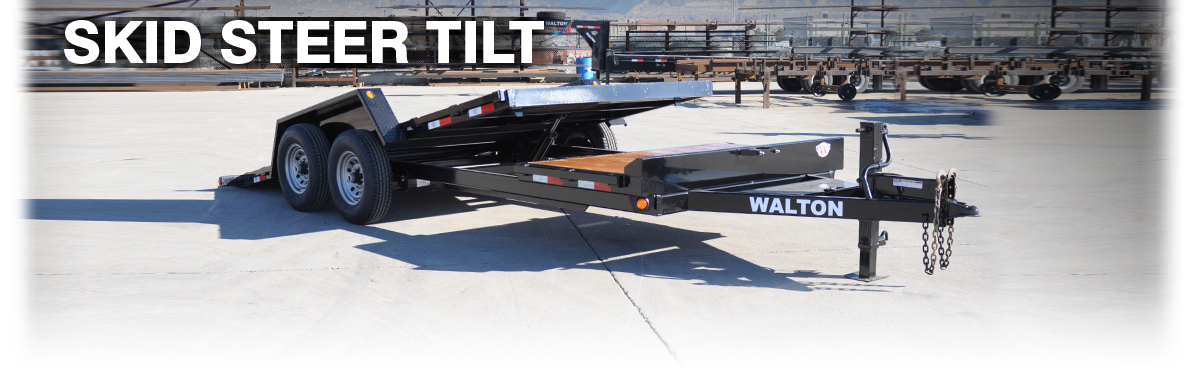
Walton Trailers at Enoven Truck Bodies and Equipment


Enoven provides a full line of Walton Trailers to fit your  needs. Take a look at their website for all the trailers they offer and full specifications.

Learn more at: https://enovenind.com/products-2/trailers/walton/